


Parallels 11 For Mac Does Not See Bootable Usb Drive
Posted on by admin
Parallels 11 For Mac Does Not See Bootable Usb Drive 4,1/5 1258 votes
I am writing this review and rating it only 3 stars, but I continue to love Parallels. I actually hope that others will buy Parallels 9 and then call, write, and chat with the support team to complain about the loss of Parallels Mobile and its replacement with a more expensive, but more functional version called Parallels Access. Hopefully, people reaching out and complaining will push them to re-visit their idea. - Parallels 11 For Mac Does Not See Bootable Usb Drive
- Parallels 11 For Mac Does Not See Bootable Usb Drive Mac
So, here's my review of the actual software. Parallels for mac view windows file sharing.
Parallels makes upgrading easy. I just popped in the Desktop 9 CD, then realized that they will let me download it. I prefer to download as the CD will never survive in my house. If I ever needed to re-install, then I will have to have it. So, I downloaded the software and hit install. It found my Parallels 8 and replaced it. All of my OS's are still there.
- When you're in OS X, just open Finder and you will see your Boot Camp installation listed under Devices; open it and you will see the contents of your C drive under Windows 10. Parallels is also very flexible, as it can be configured in all sorts of ways depending on what you are trying to do.
- Firstly, sometimes mac would have detected the drive but it might not be listed in the finder's device list. To solve that Go to Finder menu -> Preferences -> Sidebar -> Devices and ensure to check 'External Disks' in devices section.
Finally, if you are running Parallels and you find that your USB devices are being captured by Mac OS X but not your virtual guest OS, you can also go to the Devices menu, find the peripheral in question, and choose it to have Parallels wrest control from Mac OS X and hand it to your guest operating system.
Now my Dropbox and Google drive docs are available on the Windows machine. This may seem like nothing, but I can access my Photo Stream, my iCloud Docs (which I don't use), and my Google Drive docs straight from my Windows machine without having to create shares and links or by installing and mirroring the same data on the Windows machine. This is very nice and makes it much easier for me to update a file and know it will be pushed to Google Drive or Dropbox.
The last time I upgraded my Mac, I had an issue because Parallels stopped working. Apparently, Parallels Desktop 7 worked for Lion (10.7), but not Mountain Lion (10.8). That was a frustration that I wanted to avoid. When Mavericks (10.9) comes out, I can upgrade my laptop without worrying that all of my Parallels Operating Systems will shut down. I use the windows side for some of the work that I do and that was frustrating to realize that I couldn't access Windows until I upgraded Parallels. In their defense, they notated this on their website and had sent emails that I must have missed. I was pleased that the issue was documented and easy to see if I searched.
Parallels has replaced Parallels Mobile with Parallels Access as of this version. First off, what are these things, you might ask. These are Apps that you run on your iPhone/iPad which allows you to takeover your remote machine. I can sit at the coffee shop and remember I needed to hit send on an email. I grab my phone, open the Parallels Mobile app, and it connects to my laptop at home, shows me the desktop, and lets me do what I need to do. You don't have to setup your router or anything. Just have Parallels running and you're good to go. * The downside, Parallels Mobile worked for iPhone and iPad. This meant that if I just had my phone, I was still good. Parallels Mobile was introduced around version 7 and now it's being phased out. It's being phased out in favor of Parallels Access, which does the same thing, but costs $79.99/yr and doesn't currently work on the iPhone. When you connect with Parallels Access, the computer you takeover gets all funky as Parallels us tweaking the desktop resolution so that it can show you one Mac/Windows application at a time. * The upside, Parallels Access is pretty sweet. You can takeover just one Mac/Windows Application at a time. You don't have to re-size the application to perfectly fit in the screen. They have taken the iPad finger strokes and made them work when you are taking over a remote computer. It's pretty amazing and has allowed me to get more done faster.
Parallels Access might be worth $20/yr to me, but not $79.99. It's worth even less to me because I don't have a choice. Parallels Mobile is End of Purchase. http://www.parallels.com/support/desktop-virtualization/mobile/ This means that you can't get it anymore and those of us that have been with them for years can't use it if we want to upgrade. If the next Mac upgrade to Mavericks works the same, then once I upgrade my Mac, I will have to upgrade Parallels and lose access to Parallels Mobile. (This is what I was talking about on the first paragraph. Please phone, chat, Skype, and email support. Please push for Parallels Mobile to come back or Parallels Access to be reasonably priced.)
I love Parallels and they have always come out with something new and some reason that it's worth it to me to upgrade. This is the first time I wouldn't want to give 5 stars. I still love them and want to stick with them. If you are choosing between Parallels and Fusion, I'd still say to go with Parallels. We just need them to get a little less cocky and be more open with us the consumers.
I would recommend this item to a friend!This review is from Parallels Desktop for Mac - Use Windows Applications alongside your Mac Apps!.
OS X can start up your Mac in a myriad of ways, some of which our ongoing tutorial series has discussed already in detail such as using built-in Startup Manager to pick a disk to startup your Mac from and booting into Safe, Verbose and Target Disk modes.
Today we get to talk about starting your Mac up from external storage like optical media or an external USB-based hard drive or flash storage.
Booting from an external storage allows you to start up your Mac in another version or copy of OS X, troubleshoot certain issues and more.
Requirements
Starting up your Mac from an external disk requires the following:
- Intel-based Mac
- Bootable optical media (CD or DVD) on Macs equipped with Apple’s Super Drive or a USB thumb drive formatted with a GUID partition type and containing an OS X installer or a usable operating system.
Apple advises against booting from external storage containing a version of Mac OS X earlier than the one your Mac shipped with.
How to start up your Mac from a bootable CD/DVD
Step 1: Turn on your Mac by pressing the power button, or restart it if it’s already on by choosing Restart in the Apple menu.
Step 2: Press and hold the C key on your keyboard immediately upon hearing the startup chime. Your Mac should start up from the OS X installer CD/DVD media. You can also press the left mouse button on a wired mouse during the startup in order to open the disc tray.
Tip: You can easily burn a bootable image of OS X to a DVD using Disk Utility.
How to start up your Mac from an external USB storage device
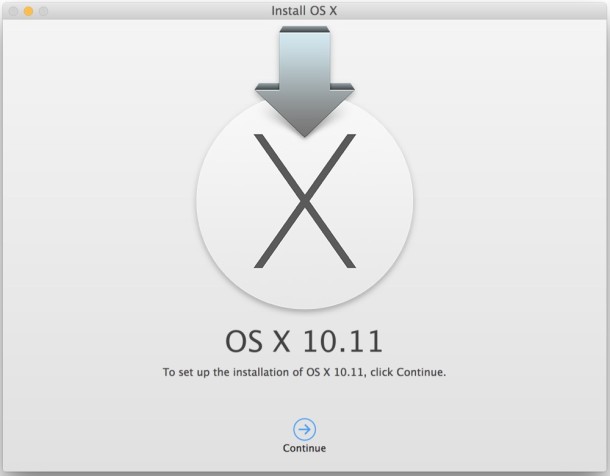
If your USB thumb drive, USB-based external disk or flash storage contains a usable operating system or an OS X installer, you can select it at boot time using OS X’S built-in feature called Startup Manager, which can be invoked via a simple keystroke.
Step 1: Turn on your Mac by pressing the power button by choosing Restart in the Apple menu, or restart it if it’s already on.
Step 2: Press and hold the Option (⌥) key immediately upon hearing the startup chime. Release the key after Startup Manager appears. Startup Manager will scan and list connected drives and volumes that can be booted from, as shown below.
Step 3: Highlight the volume you want to use by using your mouse or trackpad, or left and right arrow keys on the keyboard.
Step 4: Double-click or press the Return key to boot your Mac from the selected volume.
Tip: If there are several USB storage devices connected to your Mac, Startup Manager will only list the ones containing bootable volumes.
Full tutorial:how to pick a startup disk for your Mac at boot time.
How to start up your Mac from an external volume using System Preferences
You can use System Preferences to tell your Mac to automatically use optical media or an USB-based external disk or flash storage every time it’s restarted.
Step 1: Open the System Preferences application in the Dock.
Step 2: Now click the Startup Disk pane. You will be presented with various disk icons.
Step 3: Select the system you would like to use to start your computer up.
Step 4: Now click the Restart button to start up your Mac using the chosen volume.
Tip: Your Mac will now always boot into the selected startup disk until you change it in System Preferences, or temporarily override it through Startup Manager.
Full tutorial:how to choose a startup disk using System Preferences.
Troubleshooting startup issues
Should you run into problems whilst attempting to boot your Mac from an external storage device, consult our FAQ below to help troubleshoot any start up issues you may be plagued with.
Is the storage device to an external power supply?
Depending on its model and power requirements, it may be necessary to connect your USB storage device to an external power supply.
Is the storage device connected and turned on?
Make sure your external storage is turned on and connected to your Mac. USB-based external hard disks usually have the power on/off button at the back of the enclosure.
Does your disk need repair?
If your Mac doesn’t boot from an external volume or the drive doesn’t show up in Startup Manager even though it contains a bootable copy of OS X, it might need repair.
The first order of business should be attempting to repair disk permissions in Disk Utility. In the worst case scenario, you might need to reinstall OS X on the external volume.
Did you try using a different USB port?
If you own a MacBook or MacBook Pro notebook, try using a different USB port if you cannot startup from the external USB storage device.
Has the disk been formatted with a GUID partition type?
Intel-based Macs support starting from an external USB storage device’s volume that has been formatted with a GUID partition type.
Parallels for mac 13 cost. Parallels Toolbox for Mac and Windows 30+ tools in a lightweight, powerful, all-in-one application for Mac ® and PC. Easy to use and economical—a whole suite of tools for a fraction of the cost of individual apps, packaged in one simple interface. How can the answer be improved? Parallels Desktop 13 for Mac: I recently bought a Mac Pro 2017 and was looking to run MS SQL Management Studio but unfortunately there is no Mac version so was looking at Parallels.
Does your Mac shut down automatically upon connecting the disk?
Parallels 11 For Mac Does Not See Bootable Usb Drive
Apple states that a MacBook Air contains a preventive measure which prompts the computer to shut down automatically if the connected USB storage device has issue or if the USB port on the MacBook Air itself is damaged.
Are you using Boot Camp?
If you’re using Boot Camp in a dual-boot Windows/OS X environment, you may be unable to boot natively into supported versions of Microsoft Windows XP, Windows Vista or Windows 10 operating systems installed on external USB hard drive.
Are you using an external USB hub?
Using an external hub to connect several USB storage devices may cause your Mac to fail to recognize them at boot time. Try connecting the USB drive to another port on the hub. Should that fail, connect the disk directly into your Mac’s USB port. Keep in mind that some USB hubs and external USB storage devices need an external power supply, depending on their power requirements.
Is the disk connect to the keyboard’s USB port?
Both wired and wireless Apple Keyboard, and some other keyboards with built-in USB ports, may not supply enough power to some external USB hard drives.
Is the disk bootable?
Make sure the external drive you’re trying to start from contains a usable operating system. Volumes that aren’t bootable and don’t contain a copy of a valid operating system aren’t listed in Startup Disk or Startup Manager.
Are you using wireless keyboard?
If you use an Apple Wireless Keyboard or another Bluetooth keyboard with your Mac, keystrokes won’t be recognized during the startup process because Bluetooth isn’t initialized at boot time. Connect a wired keyboard or use the built-in keyboard if you own a Mac notebook. The same disclaimer applies to holding the left button on a wireless mouse at boot time to open the disc tray.
Other ways to start up your Mac
Your Mac can start up in a number of different ways, including the following methods that our tutorials provide step-by-step instructions for:
- Safe Mode—Invoked by pressing and holding the Shift (⇧) key after hearing the startup chime, Safe Mode disables certain features of OS X and loads only essential components to make troubleshooting software issues simpler. It also includes an automatic disk check and repair which might resolve boot problems and allow you to start up your computer successfully.
- Verbose Mode—Verbose Mode is a text-only environment which displays status messages as the startup process progresses. Press and hold the Command (⌘) – V key combination after hearing the startup chime to enter Verbose Mode. This mode is commonly used to troubleshoot startup issues and resolve problems with kernel extensions and custom hardware while allowing you to see exactly what’s going on behind the scenes as OS X loads its components.
- Target Disk Mode—Target Disk Mode allows a Mac to be used as an external hard disk connected to another Mac. To enter Target Disk Mode, turn on your Mac and hold down the T key immediately upon hearing the startup chime. Once the computer is in Target Disk Mode and available as an external volume to the host Mac, you can copy files to or from that volume. Any Mac with a FireWire or Thunderbolt port can be started up in Target Disk Mode.
- Startup Manager—OS X’s built-in Startup Manager allows you pick a volume to start your Mac up from at boot time, which temporarily overrides your startup disk defaults set in System Preferences. Just turn on your Mac, hold the Option (⌥) key after the startup chime and release it after Startup Manager appears.
- System Preferences—To change your default startup disk, use the Startup Disk pane in the System Preferences application. Your Mac will boot into the selected disk until you choose another one or temporarily override your selection using Startup Manager at boot time.
We will be covering more ways to start up your Mac in future tutorials.
Parallels 11 For Mac Does Not See Bootable Usb Drive Mac
See also:
How do you like this tutorial?
Please bookmark the article for later and consider sharing it on social media and passing it along to your friends and other Mac support folks.
Also, feel free to submit ideas for future tutorials at tips@idownloadblog.com. We like receiving feedback from you guys so share your thoughts with other readers by posting a comment below.