


How Much Is Parallels Pro For Mac For Education
Posted on by admin
How Much Is Parallels Pro For Mac For Education 3,7/5 2909 votes
- Parallels Pro For Mac
- How Much Is Parallels Pro For Mac For Education
- How Much Is Parallels Pro For Mac For Education Statistics
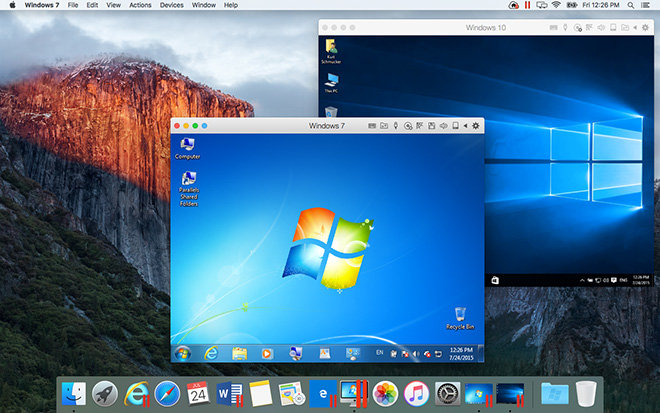
Parallels Desktop 8 for Mac License Parallels Desktop for Mac is the most tested, trusted and talked-about solution for running Windows applications on your Mac. With Parallels Desktop for Mac, you can seamlessly run both Windows and Mac OS X applications side-by-side without rebooting. Home Forums > Parallels Desktop for Mac > Mac OS X Guest OS Discussion > iMac Pro- is Parallels Desktop Pro is compatible Discussion in ' Mac OS X Guest OS Discussion ' started by HarryA2, Jan 30, 2018.
View Gallery
$79.99
- Pros
Fast performance in testing. Tight integration with guest OSes. Effortless installation. Flexible file and folder tools. Options for opening Mac files in Windows apps. Can install macOS virtual machines directly from the Mac recovery partition.
- Cons
Some Mac-integration features can be confusing or impractical until you turn them off. Only runs on a Mac, so you can't share guest machines with Windows or Linux users.
- Bottom Line
Parallels Desktop is an excellent way to run Windows apps on MacOS, especially for ordinary users. It's fast in testing, offers tight integration between Macs and guest systems, and supports many other OSes, too.
Parallels Desktop is the fastest and friendliest way to run Windows apps on a Mac for the majority of users who are likely to want to do so. IT pros may prefer VMware Fusion; expert users who want no-cost apps will prefer the open-source VirtualBox. Hardcore gamers may prefer Apple's Boot Camp, which lets users boot directly into Windows, with the added bonus of native graphics card support. For most ordinary Mac users who prefer Windows versions of apps like Microsoft Office or AutoCAD, however, or who use Windows-only apps like CorelDraw or WordPerfect Office, Parallels Desktop is the clear first choice for virtualization software.
- $79.99
- $0.00
- $0.00
- $39.99
- $0.00
- $139.99
Platforms and Pricing
Parallels Desktop supports all Windows versions since Windows 2000, all Intel-based macOS versions (with some exceptions for licensing reasons), many flavors of Linux, BSD, Solaris, and a few other OSes. VMware Fusion and VirtualBox are even more flexible, and can run historical curiosities like OS/2 and NeXTSTEP. Also, unlike Parallels Desktop, VMware Fusion and VirtualBox have versions that run on Windows and Linux machines, while Parallels Desktop is Mac-only.
There's one other important difference: Parallels Desktop is a subscription-only product, so you'll have to pay $79.99 per year for the home-and-student version or $99.99 for the Pro Edition. VMware Fusion has a one-time cost (a model some consumers may prefer) of $79.99 for its standard version and $159.99 for its Pro version. VirtualBox is free for personal use and $50 for corporate use, but you get far fewer convenience features out of the box with this open-source product.
Get Started With Parallels
Parallel's for mac. Parallels starts up with a menu for creating a new virtual machine or opening an existing one. This is where Parallels' focus on ordinary end users shines best. Unlike all other virtualization apps, Parallels doesn't expect you to have a Windows or Linux installer disk or disk image ready when you start it up, although it can use that image if you have one. Instead, Parallel's user-helpful menu lets you buy a Windows 10 download directly from Microsoft, or simply download a Windows 10 installer if you already have a license key.
Another set of options lets you install a Parallels system-export utility on your Windows PC, and export it to Parallels via a network (slowly) or an external drive. A scrolling list at the foot of the menu lets you download specific versions of Linux or Android, install a virtual copy of macOS from your Mac's hidden recovery partition, or install Windows from a Boot Camp partition if you have one.
Like VMware and VirtualBox, Parallels supports a Snapshot feature that lets you save a guest system in one or more configurations that you know works well, and then restore a saved configuration after making changes in the system that you don't want to preserve. However, Parallels is unique in supplementing this feature with a Rollback option that automatically discards all changes to a system when you shut it down, so it works like a kiosk system, returning to its pristine condition every time you power it up. This feature can be invaluable in testing, or in environments like schools where users are liable to leave systems a lot messier than they found them. If you used Microsoft's long-abandoned VirtualPC app, you'll remember this feature, and will welcome its return in Parallels.
Parallel's Performance
Compared to VMware, Parallels starts up Windows at top speed in testing. On my vintage 2015 MacBook Pro, Parallels boots Windows 10 to the desktop in 35 seconds, compared to 60 seconds for VMware. VirtualBox matches Parallels' boot speed, but it performs far fewer integration tasks while booting up. For example, VirtualBox doesn't provide printer integration and the ability to open Windows files with Mac apps and vice versa.
One reason for Parallels' bootup speed advantage is that Parallels uses an emulated PC BIOS that supports the Fast Startup option, and the others don't. The speed difference isn't nearly as obvious when running Windows apps after the OS starts up, however. Parallels feels slightly faster than its rivals, but not drastically so. Fast as it is, Parallels won't satisfy hard-core gamers because Parallels, like VMware Fusion, only supports DirectX 10, while VirtualBox only supports DirectX 9. There's nothing that Parallels can do about this limitation, which is the result of the Mac's limited support for OpenGL (Open Graphics Library) features.
By default when Parallels runs a Windows system, any files on your Mac desktop will also appear on your Windows desktop. This may sound convenient, but it's a feature that I always to turn off in Parallels' settings dialog. One reason I turn it off is that it leaves the Windows desktop cluttered. Another is that much of what I keep on my Mac desktop—like folders and apps—simply won't work when I click on them in Parallels' Windows desktop. Parallels tends to go overboard with integration features, turning them on by default whether you want them or not.
Another way Parallels goes overboard with its integration is its tendency to clutter up its dialogs and your Mac system with icons and folders that you probably don't want. For example, by default, it adds a folder full of Windows application to your Mac's dock, and a Parallels menu to Mac's menu bar—though you can turn these off by poking around the options and preferences windows. Some of Parallels' menus include links to a set of Mac-related utilities called the Parallels Toolbox; some of these utilities, like a quick disk-cleaning menu, are convenient, but you probably don't want all of them, and they have nothing to do with virtualization. Another link on Parallels' menus invites you to buy Acronis True Image backup software, which you probably don't need if you use your Mac's built-in backup features.
Parallel Computing
Anyone who wants to run a Windows app on the Mac should choose between our two Editors' Choice apps, Parallels Desktop and VMware Fusion. For IT managers, developers, and for many tech-savvy users, VMware is the best choice. For most home, school, and SOHO users who don't need VMware's unique cross-platform support and legacy features, Parallels Desktop is the fastest, most hassle-free way to run Windows apps on a Mac.
Parallels Desktop (for Mac)
Bottom Line: Parallels Desktop is an excellent way to run Windows apps on MacOS, especially for ordinary users. It's fast in testing, offers tight integration between Macs and guest systems, and supports many other OSes, too.
Other Parallels Software International System & Performance
- $79.99
- $79.99
- $49.99
Parallels Pro For Mac
Parallels 14 is definitely faster to launch and more slimline than previous versions. The improved Touch Bar support for Windows apps also makes it more convenient to use major Windows apps on Mac.
- Faster to launch and use
- Touch Bar ready for Windows apps
- Requires less hard drive space
- No DirectX 13 support for games
80%Overall Score
Parallels is still the best way to run Windows on a Mac simultaneously and the latest version of Parallels 14 has just been released.
Parallels allows you to conveniently run all those Windows only applications and games that don’t run on Mac.
Here we’ve taken a first look at the new macOS Mojave ready version of Parallels.
In a nutshell, here’s what’s new and what we like in Parallels 14.
- The biggest improvement we’ve noticed with Parallels 14 is speed. One of our biggest gripes with Parallels has always been the amount of time it takes to open but Parallels 14 launches Windows noticeably faster. Parallels claims it opens “four times faster” than Parallels 13 and while it doesn’t quite feel that fast, it’s a big improvement. While using Windows, it also feels a bit snappier than before with less lag when using big apps or games.
- Parallels takes up less space on your hard drive than previous versions. It now takes up to around 20GB less space which is a significant saving. However, this mainly applies to Windows 10 installs – the savings for other versions of Windows are a lot less.
- Parallels 14 is optimized for macOS Mojave. Parallels usually release a new version with every new version of macOS and it’s guaranteed to work with Mojave. Mojave hasn’t been released quite yet but you can test the Public Beta version of Mojave in Parallels if you want to give it a spin.
- Touch Bar support has been enhanced from the previous version. There are now pre-configured Touch Bar shortcuts for Windows software like OneNote and Quicken and you can still customize Touch Bar controls for any app you like.
- If you use a drawing tablet with your Mac, you can now use Microsoft Ink with pressure sensitive support to edit Windows Office documents on Mac. This works with Windows apps such as PowerPoint, CorelDRAW and Photoshop.
Some of the other highlights worth mentioning include:
- Dark mode can be used in Windows applications
- The new enhanced Quick Look and Screenshot features can be used in Windows
- Camera Continuity imports pictures from iOS 12 into Windows
- Graphics Support has been improved for OpenGL
- Unused virtual video memory is now used by macOS for smoother and faster operation when running Parallels
- 4K video cameras are now supported for video conferencing
There are also specific improvements to Parallels Desktop Business edition the most notable being automatic Smart Card reader availability in macOS and Windows.
On the downside:
- There’s still no support for DirectX 13 that would allow users to play games like FIFA on Mac.
- Many of the biggest 3D performance improvements are only for the latest iMac Pros so won’t be of much use to the vast majority of Mac users that have iMacs and MacBooks. This will mainly benefit those that use graphics heavy 3D modelling apps such as CAD applications on Mac.
Parallels pricing remains that same as before depending on which version you need.
How Much Is Parallels Pro For Mac For Education
As an incentive, Parallels are also offering Parallels Toolbox for free with new purchases of Parallels 14.
You can also try a free trial of Parallels 14 to test it for yourself.
How Much Is Parallels Pro For Mac For Education Statistics
You May Also Like: