


Install Linux On Parallels For Mac
Posted on by admin
Install Linux On Parallels For Mac 4,7/5 2200 votes
Information
This page has instructions on installing Linux Mint on your Mac for the first time to use with Parallels Desktop.
To update the Parallels Tools within the Ubuntu Linux environment in Parallels Desktop, simply click on the ingeniously named “Update Parallels Tools”. Parallels desktop 13 for mac games. Im running the latest parallels version, and i know it supports linux because it gives you instructions on how to install parallels tools, but theyre very vague and require that you do it through terminal. Im not linux saavy and have no idea what to type into terminal. I know people have successfully done this. Im running fedora 10, can someone helped me out? Ive searched the whole web. Parallels Desktop provides support for a plethora of operating systems, such as Windows (going from Windows 3.11 to Windows 8), MS-DOS, RED Hat Enterprise, Fedora, CentOS, Ubuntu, Debian, Suse Linux Enterprise, Mandriva, Solaris, Chrome OS, Mac OS X.
Resolution
Obtain Linux Mint installation .ISO image file.
The easiest way to obtain Linux Mint installation source is to download an installation .ISO image from either the official Linux Mint web page.
Start Parallels Desktop, then click File > New
Choose 'Install Windows or another OS from a DVD or and image file', then click Continue
Choose Linux Mint from the list of the operating system sources found on your Mac (or wait till the image will be automatically recognized), then click Continue.
Specify the name and location of your Virtual machine or leave the default settings, then click Continue
Virtual machine will start booting Linux Mint installation
Proceed with installation.
Once installation is complete, restart Linux VM
Update Linux Mint environment to the latest version. Also make sure that essential packages are installed as well. Log into your Linux Mint VM, then go to Terminal, then copy and execute the following commands one by one:
IMPORTANT: Before installing Parallels Tools and/or updating Linux Mint VM we recommend to create a fresh snapshot for your Linux Mint Virtual Machine (VM).
Restart Linux Mint VM.
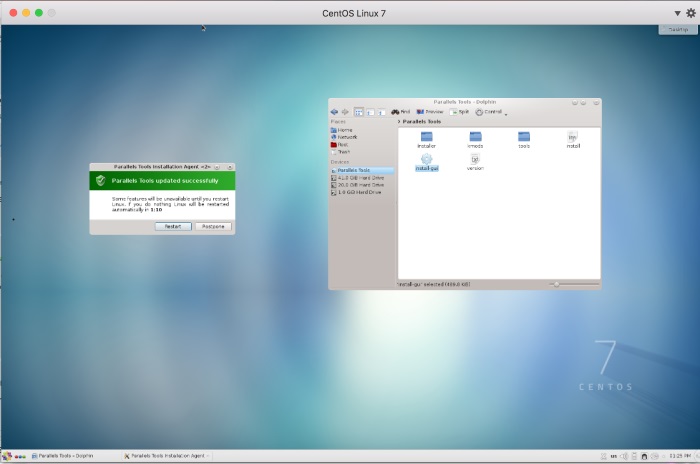
Launch Parallels Tools installation:
Restart Linux Mint VM.
- That's it. Parallels Tools are now installed for your Linux Mint VM.
IMPORTANT: In order to be able to use Coherence view mode in Linux Mint Vm, please check Disabling Desktop Visual Effects in Linux virtual machines
I finally got a reply from the Parallels support team. After using the alternate Parallels installer it finally works again! Even after rebooting Mac! *joy*
Before trying to run Vista/Bootcamp through Parallels again, I’m waiting till the end of my exams (Thursday). Don’t want to blow up my Windows install again when I’m in desperate need of it. 😉

As usual with Parallels, creating/installing a new OS isn’t easy. Wether it crashes or you get a bunch of errors, you’re always up for a day full of fun!
Here is how I managed to install Ubuntu on Parallels:
 Verified Buyer Reviewer: Anonymous Location: SoCal Age: 55-65 Experience Level: Power User Owned Product: 1-3 months Rating: 3/5 Ok I guess May 22, 2014 You will only want this if you moved to Mavericks and still run a PC on your Mac.
Parallels For Mac Support
- First of all, make sure you’re running the latest version of Parallels, especially if you’re using Leopard.
- Step 2, download the alternate Ubuntu installer. If you do not use the alternate installer, you’ll end up with ‘Display server errors’ before being able to install Ubuntu. You can download Ubuntu here. Select the approriate version (probably Desktop, latest version), and check “Check here if you need the alternate desktop CD. This CD does not include the Live CD, instead it uses a text-based installer“.
- Step 3, create a new virtual machine, with OS Linux/Ubuntu.
- And follow the steps. I’ve added some more screenshots below. You can leave everything by default, that’s as you wish.
- As CD-drive, select the Ubuntu (alternate) installer .iso-file.
Parallels For Mac Free Download
- Click Finish and Start — the Ubuntu installer will boot.
- You’ll end up in Ubuntu’s welcome screen. Select your keyboard layout (hit F3) and select (text) install
- Here too, follow the steps on the screen. It will ask for your language, country, and will propose a manual or automatic disk partition. I’ve selected automatic — it creates a big ext3 root partition, and a swap partition.
The installer then asks if you agree with the partition table. Select Yes or No. (I’ve selected No – changed my root partition from ext3 to reiserfs, as I’m a big reiserfs fan.) When selecting Yes — the table will be created and Ubuntu will start installing. - After it’s installed, Ubuntu will reboot. This is where you’ll get your first error; ACPI: Unable to locate RSDP. This is a known error; you can safey ignore it.
- Ubuntu will continue to boot, and then pop up this error: The display server has been shut down about 6 times in the last 90 seconds, and will freeze. To fix this error, shut down and restart (or reset) the VM, and hit the ESC-key. Grub’s bootloader menu will pop up if everything is right.
- Select the 2nd option (recovery). Ubuntu will boot up in text-mode-only and you should be logged in as root (if you’re not, add ‘sudo’ in front of the commands below).
- In Parallels, click (on top of your screen) “Actions” -> “Install Parallels Tools…” and type in following commands in the shell:
- mount /media/cdrom
- cd /media/cdrom
- ./parallels-tools.run
- reboot
- After Ubuntu has rebooted (in normal mode), you shouldn’t receive any more errors, and you can enjoy Ubuntu on your mac!